

Pelvic Floor Exercises

Understanding Pelvic Floor Health and Exercises

Important: Please consult with a urologist before beginning pelvic floor exercises. Not all pelvic floor conditions require strengthening. In some cases, the pelvic floor muscles may be too tight or overactive, and strengthening exercises may worsen symptoms. Your urologist can help determine whether pelvic floor strengthening or another treatment approach is appropriate for you.

Strengthening Your Pelvic Health

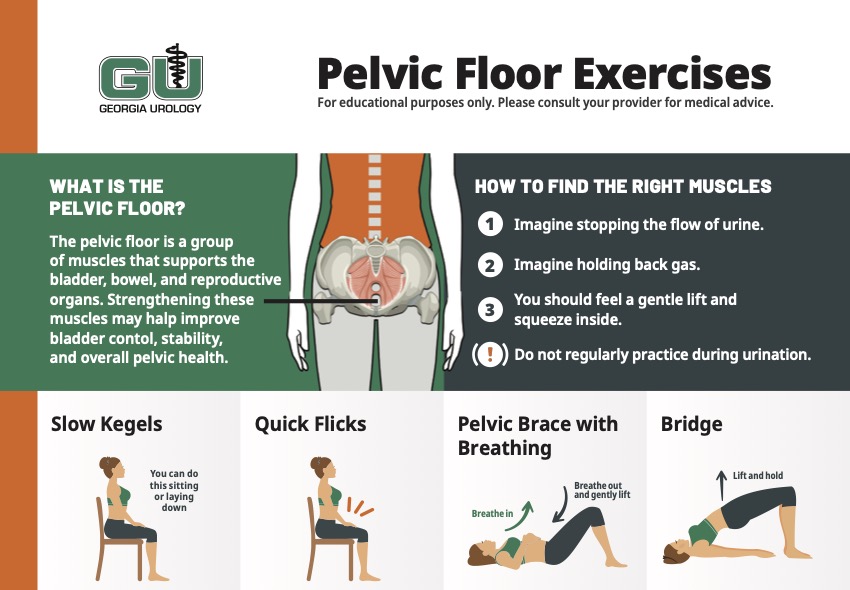
The pelvic floor is a group of muscles that supports the bladder, bowel, and reproductive organs. Strengthening these muscles may help improve bladder control, stability, and overall pelvic health when appropriate.

Pelvic floor exercises, commonly known as Kegel exercises, can help you learn to contract and relax these muscles. Practicing with the correct technique and maintaining a consistent routine are important parts of pelvic floor health.

Download The Guide!


Strengthening Your Pelvic Health

The pelvic floor is a group of muscles that supports the bladder, bowel, and reproductive organs. Strengthening these muscles may help improve bladder control, stability, and overall pelvic health when appropriate.

Pelvic floor exercises, commonly known as Kegel exercises, can help you learn to contract and relax these muscles. Practicing with the correct technique and maintaining a consistent routine are important parts of pelvic floor health.

What Is the Pelvic Floor?

The pelvic floor muscles form a supportive base for the organs in your pelvis. When these muscles are weak or not functioning properly, you may experience difficulties with bladder control or other pelvic health concerns.

Learning to identify and engage the correct muscles is the first step toward performing pelvic floor exercises effectively.

Download the Guide

How to Find the Right Muscles

If your urologist recommends pelvic floor strengthening, try these techniques to identify the muscles:

  1. Imagine stopping the flow of urine.
  2. Imagine holding back gas.
  3. You should feel a gentle lift and squeeze internally.

Important: Do not regularly practice these exercises while urinating. Use these sensations only to help identify the correct muscles.

Types of Pelvic Floor Exercises

1. Slow Kegels

Slow Kegels focus on contracting and relaxing the pelvic floor muscles in a controlled way.

  1. Tighten your pelvic floor muscles.
  2. Hold for 3–5 seconds.
  3. Relax for 3–5 seconds.
  4. Repeat 10 times.

Tip: Breathe normally and avoid holding your breath. You can perform this exercise while sitting or lying down.

2. Quick Flicks

Quick Flicks involve brief pelvic floor contractions that may be incorporated into your exercise routine when appropriate.

  1. Gently tighten your pelvic floor muscles.
  2. Briefly contract the muscles, following your healthcare provider’s instructions.
  3. Fully relax the muscles between contractions.
  4. Repeat as directed by your healthcare provider.

Tip: Quick contractions may help some people manage sudden urinary urges or provide support during activities such as sneezing. Ask your urologist whether these exercises are appropriate for you.

3. Pelvic Brace With Breathing

Coordinate gentle pelvic floor engagement with your breathing, if recommended by your healthcare provider.

  1. Gently engage your pelvic floor muscles.
  2. Breathe out while gently lifting the muscles.
  3. Breathe in and relax.
  4. Repeat as directed by your healthcare provider.

Tip: Think of a gentle lift rather than a hard squeeze. Relaxation is just as important as contraction.

4. Bridge

The bridge exercise combines a controlled lifting movement with pelvic floor engagement, when appropriate.

  1. Lie on your back with your knees bent and feet flat on the floor.
  2. Gently engage your pelvic floor muscles if instructed to do so.
  3. Lift your hips in a controlled motion.
  4. Lower your hips and relax your pelvic floor.
  5. Repeat as directed by your healthcare provider.

Tip: Keep your arms resting alongside your body and avoid holding your breath.

Helpful Reminders

  • Follow the exercise frequency and repetitions recommended by your urologist or pelvic floor physical therapist.
  • Relax fully between repetitions.
  • Avoid excessively tightening your buttocks, thighs, or shoulders.
  • Do not forcefully contract your pelvic floor muscles or continue an exercise that causes pain.
  • Improvement may take several weeks, depending on the underlying condition and treatment plan.

When Should You Seek Help?

Talk to your urologist or a pelvic floor physical therapist if you experience:

  • Pain or increased pelvic discomfort while performing exercises.
  • Urinary leakage or urgency that persists or worsens.
  • Difficulty identifying or engaging the correct muscles.
  • A feeling of pelvic tension or difficulty relaxing the muscles.
  • Symptoms that do not improve with your recommended treatment plan.

A pelvic floor physical therapist can assess your muscle function and technique and help determine whether strengthening, relaxation techniques, or another treatment approach may be appropriate.

Support for Your Pelvic Health

You don’t have to figure it out alone. Georgia Urology offers care for a range of urinary and pelvic health concerns, and our specialists can help you explore appropriate next steps.

Contact Georgia Urology to discuss your symptoms and determine the care that’s right for you.

Ready to take the next step? Visit Georgia Urology to learn more about our providers and locations or to schedule an appointment.