Are Mushrooms a Urologic Superfood?
Mushrooms have gotten a lot of attention lately for their immune support, antioxidant power, anti-inflammatory effects, and disease prevention. Does that mean they’re also good for your urinary system?
There’s been a lot of talk about mushrooms in the context of medicine. A cursory internet search or a look at social media would make it seem as though the culinary vegetable (technically a fungus) were a cure-all. And it would appear that people are downright obsessed with them right now.
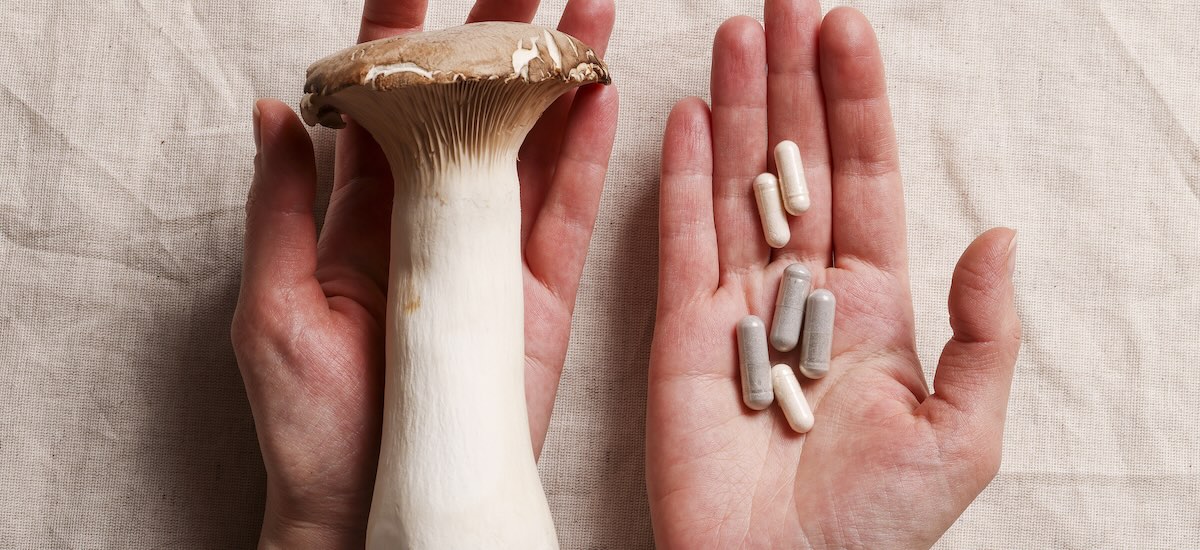
From a dietary standpoint, mushrooms are generally good for you. Edible mushrooms like shiitake, maitake, white button, and oyster, and supplemental mushrooms like reishi and cordyceps do have nutritional benefits. They fit into a balanced diet and are rich in fiber, various micronutrients, and bioactive compounds.
From a medicinal standpoint, it gets a little murky.
It’s true that the compounds they contain have attracted considerable scientific interest. Researchers have investigated various species for their potential effects on inflammation, immune function, cancer, and other aspects of health with promising results.
When it comes to urologic health, the research is still preliminary.
Why Are Scientists Interested in Mushrooms and Urologic Health?
It comes down to what the mushrooms contain. Different species contain compounds that have demonstrated antioxidant, anti-inflammatory, immune-modulating, and anticancer activity in laboratory studies, leading researchers to investigate whether these effects could translate into benefits for conditions affecting the urinary tract and prostate.
Prostate cancer has received some of the most attention. Studies using mushroom extracts and prostate cancer cells have found that certain compounds can interfere with cancer-cell growth and promote apoptosis (programmed cell death). They’ve also found evidence suggesting an effect on or disruption of signaling pathways involved in prostate cancer growth.¹ However, these are laboratory findings of a substance that affects cancer cells in a dish. Whether those effects translate into meaningful benefits when consumed by a person has only been explored in preliminary human research trials.
But there have been human studies, and they are promising. A Japanese study followed more than 36,000 men for about 13 years and found that men who reported eating mushrooms three or more times per week had a lower incidence of prostate cancer than men who ate mushrooms less than once a week. The association was modest, with the higher-consumption group having about a 17% lower relative risk.² However, this was an observational study, so it cannot establish that eating mushrooms prevented prostate cancer.
In another study, an early phase I trial, men with biochemically recurrent prostate cancer took powdered white button mushroom at different doses. Some participants experienced decreases in PSA (prostate-specific antigen), a protein produced by the prostate gland that is also used to help detect and monitor prostate cancer.³ These findings were interesting enough to warrant further investigation, but the study was small and was not designed to establish that white button mushrooms could treat prostate cancer.
More recently, researchers looked at both mouse models and patients also with regard to white button mushrooms. In the animal models, white button mushroom treatment reduced tumor growth and decreased the number and activity of MDSCs (immature immune cells that can suppress the body’s ability to attack cancer cells), while increasing antitumor immune responses. In the patients, three months of white button mushroom supplementation was associated with a decrease in circulating MDSCs and an increase in cytotoxic T cells and natural killer cells (immune cells that can recognize and attack abnormal or infected cells).⁴ The implication here is making it harder for tumors to grow.
Mushrooms have also been investigated for urinary symptoms themselves, rather than cancer. In a small randomized, placebo-controlled trial, 88 men with mild-to-moderate lower urinary tract symptoms (LUTS) took a reishi extract or placebo for 12 weeks. Participants taking the extract had improvement in symptom scores, but objective measures such as prostate size and urinary flow rate did not seem to change significantly.⁵
Taken together, the research gives us reason to be interested in mushrooms, but not to consider them a proven urologic treatment. Laboratory and animal studies have identified several potentially useful biological effects, and a handful of human studies have produced intriguing findings. At this point, however, the evidence is not strong enough to say that mushrooms prevent prostate cancer, treat prostate cancer, shrink the prostate, or broadly improve urinary health.
Should You Eat More Mushrooms or Take Supplements?
That depends on what you’re hoping to get from them.
If you enjoy mushrooms, keep eating them! They’re good for fiber, B vitamins, selenium, copper, potassium, and other nutrients, along with a variety of bioactive compounds:
- Beta-glucans: complex carbohydrates found in the cell walls of mushrooms that can interact with immune cells and influence immune signaling.
- Ergothioneine: an antioxidant compound that mushrooms can contain in relatively high amounts that protects cells from oxidative stress.
- Glutathione: an antioxidant that helps protect cells against oxidative damage and is involved in the body’s antioxidant defense system.
- Polyphenols and flavonoids: plant-derived antioxidant compounds that can help neutralize reactive molecules and may influence inflammatory pathways.
- Triterpenes: particularly abundant molecules in some medicinal mushrooms such as reishi that have demonstrated anti-inflammatory, antioxidant, and other biological effects in laboratory research.
Some mushrooms can also provide vitamin D when they have been exposed to ultraviolet light.
As far as eating them or taking supplements for medicinal purposes, we still don’t know enough about the appropriate dose, long-term benefits, or which mushroom preparations are most useful for specific urologic conditions. There is not enough evidence to recommend eating mushrooms as a way to prevent prostate cancer, and mushrooms should not be viewed as a substitute for routine screening, a healthy diet, or other measures known to reduce cancer risk.
Also, a supplement containing a mushroom extract studied in a clinical trial is not necessarily equivalent to another product simply because both have the same mushroom listed on the label. This doesn’t mean supplements are bad for you; it means the evidence for their use in urologic health isn’t strong enough to support broad recommendations. If you’re considering a medicinal mushroom supplement, particularly if you have cancer, take prescription medications, or have a chronic medical condition, it’s worth discussing it with your doctor or pharmacist first.
The best course of action is to eat mushrooms as part of a varied, balanced diet rather than relying on a supplement for a specific urologic benefit. As long as you don’t have a medical condition limiting your intake, mushrooms are a healthy addition to your diet. For people with conditions like chronic kidney disease who are advised to watch their potassium intake, mushrooms, along with other high-potassium foods, may need to be consumed in limited quantities. Also, talk to your doctor before starting any new supplements, including mushrooms, to make sure they will not interact with any medications you are currently taking. For example, Reishi has had cases of hepatotoxicity (chemical-driven liver damage or drug-induced liver injury) and can interact with blood-thinning medications.
Our team of board-certified providers at Georgia Urology offers diagnosis and treatment for a wide range of conditions affecting the urinary tract, including kidney stones, prostate conditions, urinary incontinence, urologic cancers, and sexual health concerns.
References:
- Konno, S., Penunuri, A., & Wong, J. (2024). Significance of Mushrooms in Urological Diseases and Disorders. International Journal of Health Sciences and Research, 14(5), 98–108. https://doi.org/10.52403/ijhsr.20240511.
- Zhang, S., Sugawara, Y., Chen, S., Beelman, R. B., Tsuduki, T., Tomata, Y., Matsuyama, S., & Tsuji, I. (2020). Mushroom consumption and incident risk of prostate cancer in Japan: A pooled analysis of the Miyagi Cohort Study and the Ohsaki Cohort Study. International journal of cancer, 146(10), 2712–2720. https://doi.org/10.1002/ijc.32591.
- Twardowski, P., Kanaya, N., Frankel, P., Synold, T., Ruel, C., Pal, S. K., Junqueira, M., Prajapati, M., Moore, T., Tryon, P., & Chen, S. (2015). A phase I trial of mushroom powder in patients with biochemically recurrent prostate cancer: Roles of cytokines and myeloid-derived suppressor cells for Agaricus bisporus-induced prostate-specific antigen responses. Cancer, 121(17), 2942–2950. https://doi.org/10.1002/cncr.29421.
- Wang, X., Ma, S., Twardowski, P., Lau, C., Chan, Y. S., Wong, K., Xiao, S., Wang, J., Wu, X., Frankel, P., Wilson, T. G., Synold, T. W., Presant, C., Dorff, T., Yu, J., Sadava, D., & Chen, S. (2024). Reduction of myeloid-derived suppressor cells in prostate cancer murine models and patients following white button mushroom treatment. Clinical and translational medicine, 14(10), e70048. https://doi.org/10.1002/ctm2.70048.
- Noguchi, M., Kakuma, T., Tomiyasu, K., Yamada, A., Itoh, K., Konishi, F., Kumamoto, S., Shimizu, K., Kondo, R., & Matsuoka, K. (2008). Randomized clinical trial of an ethanol extract of Ganoderma lucidum in men with lower urinary tract symptoms. Asian journal of andrology, 10(5), 777–785. https://doi.org/10.1111/j.1745-7262.2008.00361.x.