Treating Kidney Stones
Kidney stone treatment depends on the stone’s size, location, number, and composition. Small asymptomatic stones can be watched and treated later if they grow or cause symptoms.
Extracorporeal shock wave lithotripsy (ESWL) - A non-invasive procedure performed from outside the body that uses shock waves to break up kidney stones. These fragments can then pass in your urine. ESWL is a safe outpatient procedure with minimal pain, and most people return to work within 1 to 2 days.
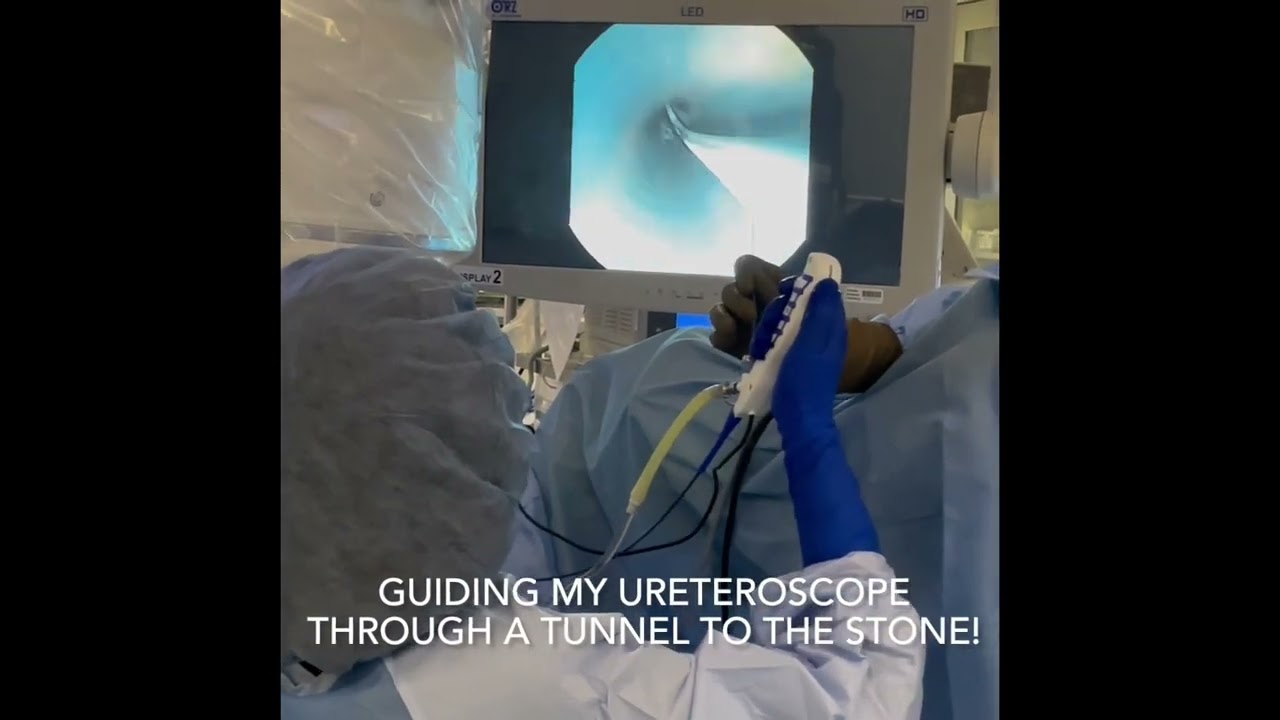
Ureteroscopy with Laser Lithotripsy - Ureteroscopy uses a small endoscopic instrument called a ureteroscope to access the ureter. Laser energy is used to fragment the stone. This technology allows treating more complex and larger stones, leading to a stone-free rate greater than 95 percent.
SURE Procedure - Stone Ureteral Removal with Evacuation is an advanced, minimally invasive technique used to treat kidney stones, particularly when they are located in the ureter or kidney. It combines irrigation and vacuum aspiration to effectively remove stone fragments after they’ve been broken up by traditional methods like laser lithotripsy.
Percutaneous Lithotripsy (PCNL) - Tiny instruments are placed directly into the kidney through an access port in the flank. This allows the removal of larger and more complicated stones. PCNL is surgery and requires a hospital stay, but it offers excellent stone-free rates.