Frequently Asked Questions
Who is an appropriate candidate for Aquablation therapy?
Aquablation therapy has been proven as a safe and effective treatment for patients suffering from lower urinary tract symptoms (LUTS) due to BPH. Aquablation therapy can be performed on prostates of any size.
How common is Aquablation therapy surgery?
Aquablation therapy is commercially available in the United States, Canada, Europe, the United Kingdom, the Middle East, and Asia.
What is the success rate of Aquablation therapy?
Aquablation therapy has been studied in seven different clinical trials. It has been shown to be a safe and effective treatment option for patients suffering from lower urinary tract symptoms (LUTS) due to BPH.
How is Aquablation different from other BPH treatments?
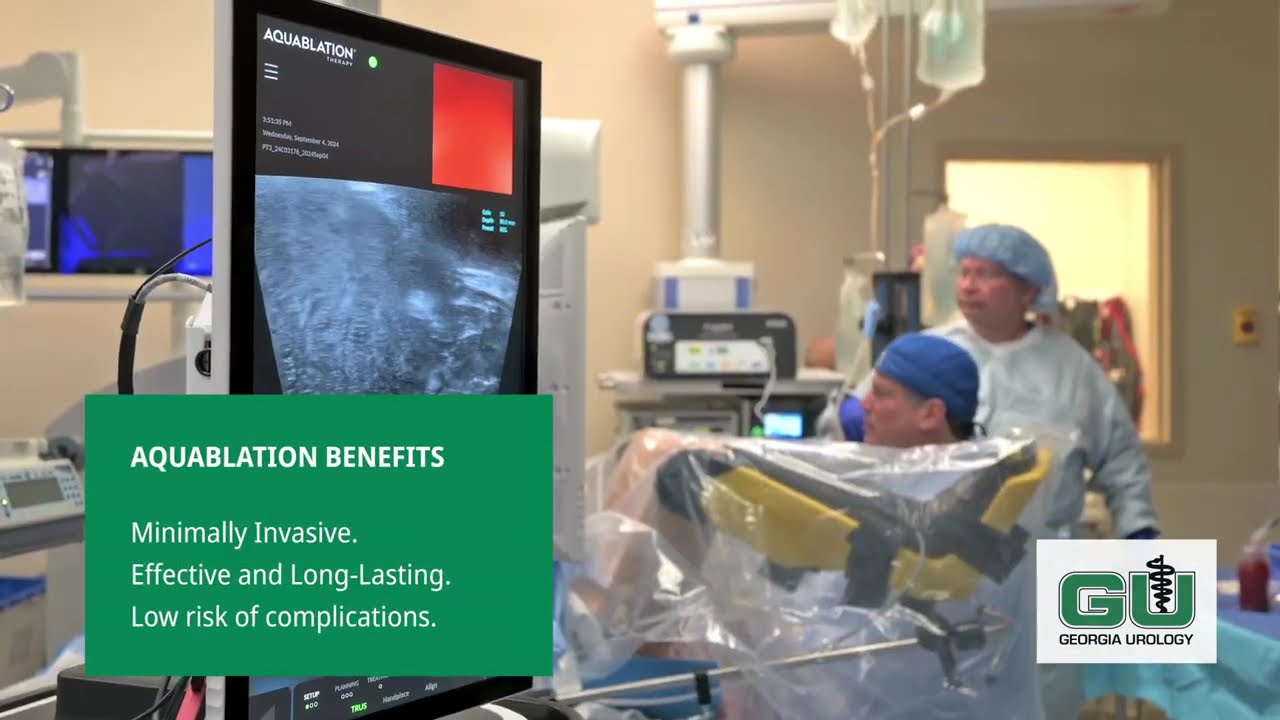
Aquablation is unique because it combines the precision of imaging with the power of water. It is the only BPH procedure using a heat-free waterjet, reducing the risk of sexual side effects and preserving surrounding structures better than heat-based techniques like TURP or laser therapies.
How long does the procedure take?
The Aquablation procedure usually takes around 45–60 minutes. Patients are typically under general or spinal anesthesia during the treatment.
Is Aquablation therapy painful?
The procedure itself is not painful due to anesthesia. Some mild discomfort, such as urgency, frequency, or burning during urination, may occur during recovery but generally subsides within a few days to weeks.
How effective is Aquablation therapy long-term?
Clinical studies show that Aquablation provides durable symptom relief up to five years post-procedure. It is considered effective for a wide range of prostate sizes and anatomies.