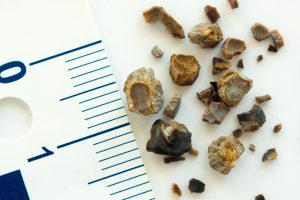
Although kidney stones are rarely life threatening, they might not feel like it. In fact, they can be extremely painful. Here is some basic information about this condition, along with possible treatment options.
What Are Kidney Stones?
Kidney stones are small deposits that form on the insides of the kidneys when urine becomes too concentrated, thus allowing minerals to stick together. Certain factors may increase the risk of forming kidney stones, including obesity, a diet that is high in sodium, dehydration, a history of gastric bypass surgery, a family history of kidney stones, and age (those 40 and older face a higher incidence).
Signs and Symptoms
The most common symptom of a kidney stone is pain below the ribs in the back and/or on the side
Other common signs and symptoms of kidney stones include:
Pain when urinating
Pain in the groin and/or lower abdomen
Frequent urination
An urge to urinate that won’t go away
Odd urine color (usually brown, pink or red)
Foul-smelling urine
Cloudy urine
Nausea and vomiting
In most cases, kidney stones don’t cause any symptoms until they begin to move around inside the kidney. Kidney stones might also cause pain if they pass into the ureter, which is the tube between the kidney and the bladder. When symptoms begin, the pain often comes in waves. If an infection develops, you might also develop fever and chills.
Treatment Options
If you are experiencing the symptoms of kidney stones, a urologist might be able to help. After confirming that your symptoms are the result of kidney stones, your urologist can recommend one of several different treatment options.
Extracorporeal Shock Wave Lithotripsy
ESWL is a noninvasive procedure that breaks the kidney stone into smaller pieces with shock waves that are focused on the stone without the need of an incision. Because the pieces are so small, they can typically pass in urine with little or no pain.
Stone Extraction
If the stone is lodged in the ureter, stone extraction may be the best course of treatment. During this procedure, the urologist inserts an instrument into the urethra and uses it to dislodge and/or break up the stone.
Percutaneous Lithotripsy (PCNL)
For larger stones, PCNL may be recommended. During this procedure, the urologist inserts an instrument through a button-sized incision in the back and into the kidney to remove and/or break up the stone.
Observation
If your stone is small and causing no symptoms, your urologist may recommend a cautious approach, watching and waiting to see if it passes on its own. During this time, your doctor might give you medication with instructions to drink plenty of water.
If you are experiencing symptoms of a serious kidney stone, the Georgia Urology Kidney Stone Hotline (1-855-786-6311) is available 24/7 to set up same-day or next-day appointments.
Richard Head wasn’t aware there was a blockage in his body that prevented his kidney from functioning properly. He also wasn’t aware that there was blood in his urine, as he was not experiencing any pain or discomfort in these areas. Unfortunately, some health issues do not cause overt symptoms until they’ve turned into severe problems. […]
By: Joseph Song, M.D. Living in the Atlanta area and the southeast United States generally has many benefits. However, a dubious distinction of our area revolves around why we are known as the “stone belt.” No, we’re not talking about mining stones or gems. Instead, it’s the fact that those who live in the southeast United […]
Your body’s organ systems work together to keep you healthy and strong, each serving a different but vital purpose in helping your body function. Although many people are embarrassed to think about or discuss their urinary tract, properly caring for the organs in this system can be the difference between feeling great and falling ill. […]