If you have questions about the medical management of kidney stones, you’re not alone. That’s why Georgia Urology’s Dr. Edan Shapiro is answering all your most pressing questions about the medical management of kidney stones.
What are Kidney Stones?
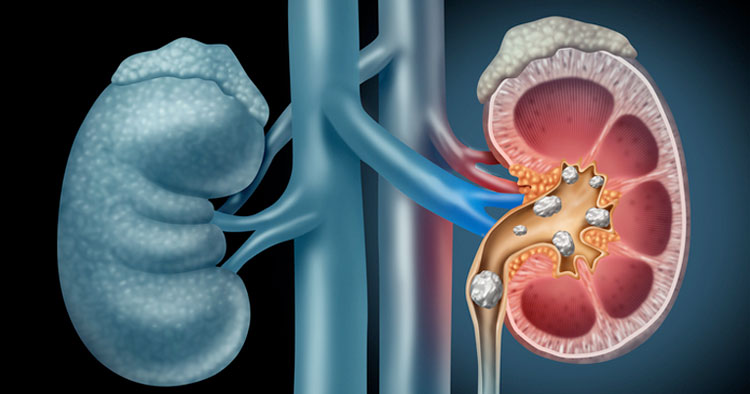
Kidney stones are one of the most common reasons for patient visits to our urology offices. In fact, one out of every 11 people will be affected by a kidney stone at some point in their lifetime. This represents a dramatic increase in the prevalence from just a few decades ago.
Additionally, stones can affect both men and women equally. Individuals with symptomatic stone pain often require visits to the emergency room and may even require a surgical procedure.
How Can I Prevent Them?
While the technologies to treat stones in a minimally invasive way are constantly evolving, perhaps an even more important focus has been on the medical management of stone disease. That is to say, how do we prevent stone formation in the first place? This is especially important considering that nearly ½ of people who get stones will have a recurrence.
Aside from the recommendation that all stone formers should drink at least 2.5 liters of fluid daily, there is no single dietary change or medicine to take that will improve every single person’s chance of getting a stone. This is despite some of the misinformation on the internet. Adding lemon juice or removing sweet tea from the diet may not help everyone!
Rather, it is important to determine the individual person’s risk profile, and then use that information to tailor a strategy. Make sure to ask your urologist about this.
What is a 24-hour Urine and Why Should I Consider Getting One?
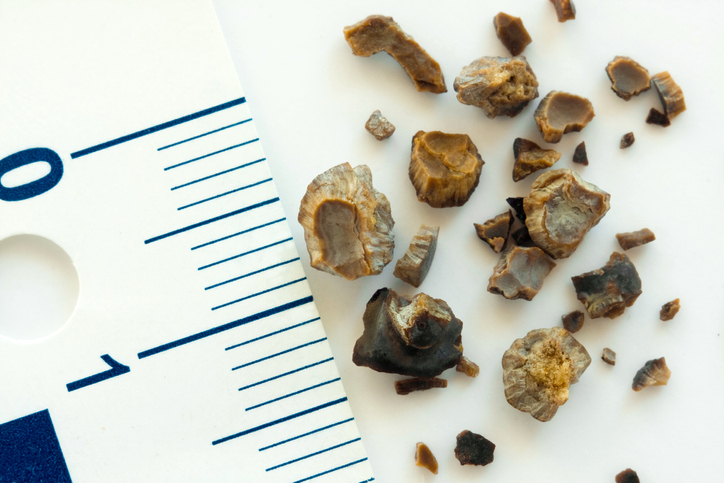
Whenever a passed stone is available to test, it is a good idea to send that stone for analysis and determine its composition. But this represents only a small piece of the puzzle and often fails to tell the entire story. Perhaps more important is performing additional metabolic testing, which is recommended for any recurrent stone former, or even for the first-time stone former who is interested in minimizing their future risk.
This mainstay of this additional testing is a 24-hour urine collection, which is then analyzed for at least 10 different factors that are involved with stone formation. These factors collectively determine the patient’s risk and occasionally uncover an underlying systemic issue (such as a problem with the parathyroid gland or an issue with the kidney). By determining what factors are higher or lower than they should be, it is then possible to make recommendations to favorably alter those levels in a way that minimizes risk.
This is usually first attempted with diet modifications, though pharmacologic therapies also exist. For example, someone who is found to have high levels of calcium in their urine should be encouraged to limit their sodium intake; despite what many may assume, they do NOT need to alter their actual calcium intake. When this dietary change is not enough, certain types of pills can then be prescribed to further lower the level of calcium in the urine. Similar recommendations exist for people with other common scenarios, such as having elevated oxalate levels, elevated uric acid levels, or for people with low urinary citrate levels.
Will I be Able to Prevent all Stones?
Even the best of plans cannot be 100% foolproof. Therefore, it is important to repeat the 24-hour urine test after the implementation of a treatment strategy and then with some regularity. This way, the strategies can be constantly improved, setting up the person for success. It is also important to make sure to get periodic follow-up imaging (e.g. ultrasound, x-ray, CAT scans) to look for interval stone formation or growth.
If you have any more questions about the medical management of kidney stones for the Georgia Urology team, click here to schedule an appointment with any of our expert urologists.
Although kidney stones are rarely life threatening, they might not feel like it. In fact, they can be extremely painful. Here is some basic information about this condition, along with possible treatment options. What Are Kidney Stones? Kidney stones are small deposits that form on the insides of the kidneys when urine becomes too concentrated, […]
By Dr. Barry M. Zisholtz, M.D., F. A. C. S Kidney stones have been documented for thousands of years. They have been discovered in ancient Egyptian mummies, clearly well before we had the type of instrumentation and technology that we have in the 21st century. It is almost impossible to comprehend how ancient man dealt with something […]
Georgia Urology has partnered with former NFL and University of Georgia linebacker Thomas Davis in a Kidney Stone Hotline spot for WSB-TV. The commercial ran all summer as part of our annual focus on kidney stone awareness. Check out a few pictures from behind the scenes! Haven’t got time for the pain? Call the Kidney […]