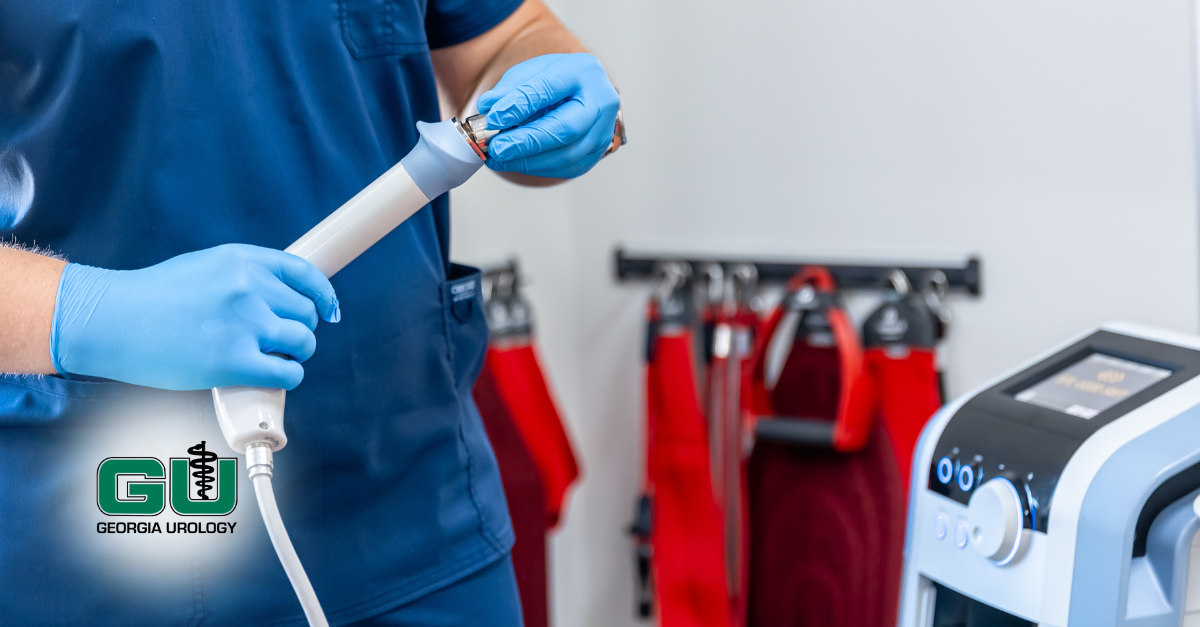
Shockwave Treatment for Erectile Dysfunction (ED)
Erectile dysfunction is one of the most disruptive and concerning issues that men’s health specialists and urologists treat. While most cases of erectile dysfunction are physical, they have a distinct psychological effect as well. Men often feel “less than” if they cannot achieve an erection or maintain it sufficiently for sexual intercourse. They frequently believe that their partners will judge them and thus psych themselves out during sexual encounters, making the problem even worse. Of course, men’s sexual health is a significant focus of urologic research, and today, we have several treatment options, from medication to penile implants. But, ideally, we would have a one-and-done option with a curative effect.
Is Shockwave the Answer?
While shockwave therapy has proven effective with certain forms of kidney stones, there has been a push, often by less than scrupulous men’s clinics, to offer shockwave therapy at a high cost to men with erectile dysfunction.
Most cases of erectile dysfunction are caused by the accumulation of plaque along the walls of the penile arteries. These men’s clinics would have you believe that the shockwaves can break up this plaque and allow blood to flow more freely. Unfortunately, there is no data to support this assertion, and typically, shockwave does not work – though there could be psychogenic or placebo effects in patients with very mild ED.
What Are My Options?
When a patient first experiences erectile dysfunction, we turn to pills like Viagra/sildenafil or Cialis/tadalafil, which dilate the arteries, allowing for better blood flow to the penis. For most men with mild to moderate erectile dysfunction, these pills do their job and typically continue to do so for several years. However, there will be a certain point, as blood flow is further reduced, where pills cease to function. At this point, patients can choose from several options, including urethral suppositories, penile injections, and vacuum erection devices.
For patients who do not experience improved erectile function from these options or prefer not to take those routes, a penile implant can be considered. This curative and permanent option removes the corpora cavernosa (spongy erectile tissue) and replaces them with biocompatible inflatable tube structures. A pump in the scrotum fills these tubes with fluid held in a reservoir implanted in the pelvis. Men and their partners are typically delighted with the implant and often have an active sex life for upwards of a decade or more before they “wear out” the implant and need it replaced.
In addition to extensive experience in the implantation of penile prostheses, Georgia Urology physicians are among the few urologic practices in the US with multiple Center of Excellence specialists for both the AMS 700 and the Coloplast Titan, the two most implanted penile prostheses.
Most importantly, if you are experiencing erectile dysfunction, speak to a qualified urologist and men’s health specialist like those at Georgia Urology, who offer a breadth of treatment options no matter what degree of erectile dysfunction you have.