Three’s a Crowd: Georgia Urology Physician Uncovers Rare Case of Ureteral Triplication
In 2019, Christie Baggett of Warner Robins, Georgia knew something was wrong with her 6-year-old daughter, Charlotte. However, she would have never thought Charlotte was experiencing one of the rarest urinary tract conditions imaginable.
When Charlotte was 5, Christie began noticing her daughter was experiencing urinary problems. Charlotte’s pediatrician reassured them this could be a normal stage in her growth.
“The doctor said Charlotte would grow into her bladder,” Christie recalls. “But things only got worse throughout the next year. That’s when I knew we needed to see a specialist.”
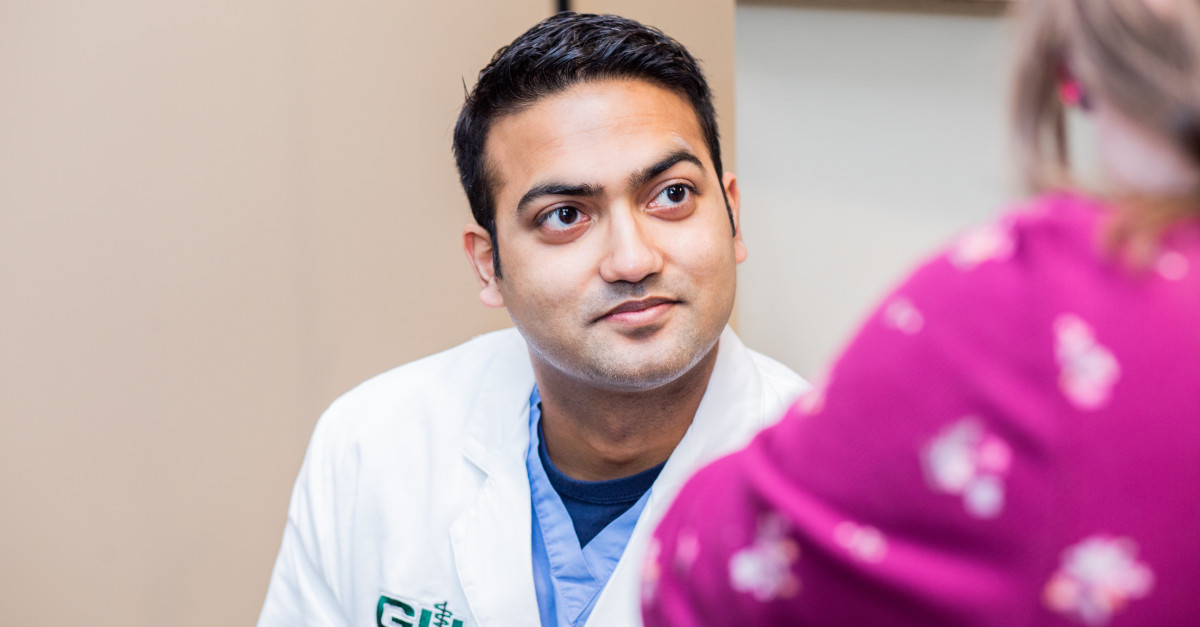
In the fall of 2020, Charlotte was examined by Dr. Shuvro De, one of Georgia Urology’s acclaimed pediatric urologists. In an effort to pinpoint the problem, Dr. De ordered an array of tests.
“We live about two hours from Dr. De’s office,” Christie says. “So, when we drove to appointments, we always needed to factor in frequent bathroom stops along the way.”
Charlotte symptoms began worsening, including excruciating abdominal pain and vomiting. Additionally, she had to urinate three to five times an hour.
Charlotte was initially placed on urotherapy, a lifestyle and behavioral therapy aimed to improve bowel and bladder habits. In addition, she underwent biofeedback sessions that did not seem to help.
Knowing there was something suspicious about Charlotte’s symptoms, additional tests were done that revealed that Charlotte had a large ureter, but seemingly normal kidneys, which was very abnormal.
It was not until Charlotte received a renal MRI that her problem was brought to light. Dr. De discovered she had three ureters instead of one on her left kidney, an extremely rare condition known as ureteral triplication. The middle ureter, which was a large, megaureter, ended outside of Charlotte’s bladder, causing incontinence.
“I’ve never seen a case like this in more than 20 years of practice,” says Dr. Andrew Kirsch, Medical Director at Georgia Urology, and Chief of Pediatric Urology and Director of Robotic Surgery at Children’s Healthcare of Atlanta (CHOA).
Dr. De recommended minimally invasive surgery to remedy the issue. He, Dr. Kirsch, and Dr. Maggie Lovin performed a procedure known as a robotic ureteroureterostomy. In the surgery, the problematic middle ureter was disconnected and then reattached to the upper ureter, which had a normal implantation on the bladder.
The surgery proved successful not only for Charlotte, but also for the physicians involved. Dr. Lovin received special recognition at the 2022 North American Robotic Urology Symposium (NARUS) for a presentation she gave based on a paper she and Drs. De and Kirsch wrote on the case.
“The Georgia Urology doctors took really great care of Charlotte and treated her like a rock star,” Christie remembers. “This really helped her get through such an unpleasant experience. It was quite a rollercoaster going through this with Charlotte, but she has a happy ending.”
Today Charlotte’s quality of life has drastically improved. She’s no longer battling urinary frequency and abdominal pain, which enables her to enjoy her childhood to its fullest, from playing sports to having sleepovers with friends.
“We were so used to Charlotte spending so much time in the bathroom, it was shocking when that was no longer the case,” Christie says. “That’s when we realized what a toll it had taken on Charlotte and the rest of our family. But if sharing Charlotte’s experience helps one other child, then it would have been worth it.”