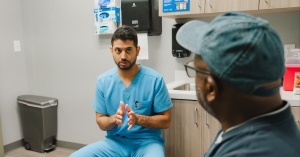
The techniques and technologies surrounding penile implants have improved dramatically over the past decade. Today, implants last longer and offer greater function than ever before. To that end, over 95% of patients are satisfied with sexual intercourse or sexual activity, and 97% of patients recommend a penile implant to those considering it.
Recovery from penile implantation, however, requires a disciplined approach to post-procedure recommendations. To ultimately achieve these results, patients will experience some discomfort.
Typically, this discomfort can be managed by alternating acetaminophen or Tylenol with Advil/Motrin or ibuprofen every 3 to 6 hours as your urologic surgeon directs. Fortunately, the need for narcotics is rare, and the minimally invasive nature of modern penile implants means that very few patients require such powerful pain medications.
Pain During The Cycling Process
About three weeks after the procedure, patients will be instructed on cycling the penile implant, which involves inflating and then deflating it twice a day for up to 30 minutes or as long as can be tolerated without significant pain. The cycling process will be somewhat painful at first. However, over a week or so, the pain should rapidly dissipate, and patients should be able to maintain an erection for significantly longer. Once again, if patients are experiencing pain, an over-the-counter analgesic is often enough to get through it.
Pain During Sexual Activity
After the cycling process is complete, about 5 to 6 weeks after surgery, patients will likely be cleared for sexual activity. Here again, it’s likely that they will experience a bit of discomfort, certainly in the early days, which will dissipate with time. Patients are encouraged to take an over-the-counter analgesic 15 to 20 minutes before sexual activity and slowly ease into their normal sexual habits to mitigate any discomfort and enjoy pleasurable sex.
The Bottom Line
All in all, the discomfort or pain associated with a penile implant is moderate and dissipates quickly with proper aftercare and pain management. Considering how transformative the surgical procedure is, most patients are surprised at how little pain they experience.
That said, we do not want you to suffer in pain, so if over-the-counter analgesics do not offer the expected relief, it’s important to speak to a Georgia Urology team member or your surgeon to learn about your options.
On Sunday, July 23, 2023, Georgia Urology’s Dr. Michael Kemper returned as the featured guest on “The Weekly Check-Up” on News/Talk WSB Radio. Throughout the show, Dr. Kemper and host Dr. Bruce Feinberg focused on men’s health. They discussed enlarged prostate (BPH), lifestyle changes to prevent bladder problems, and the importance of committing to treatment. […]
By Barry M. Zisholtz, M.D., F. A. C. S. Prostate cancer is the most common solid malignancy in men. It can be seen in up to 40-50% of men as they approach 90 years of age. There are various stages and grades of prostate cancer, which is important to note, because each stage can determine […]
Chances are, you’ve heard the acronym “PSA.” It stands for prostate-specific antigen, a protein produced by cells in the prostate, which is a walnut-sized gland below the bladder that’s involved in semen production. Normally, only small amounts of PSA enter the bloodstream. But when the prostate is affected by certain health conditions, PSA levels can […]