
Options for Non-Obstructive Azoospermia
Non-microscopic TESE (Testicular sperm extraction)
Patchy areas of sperm production may be present, but the sperm produced are so few that none survive transit to the outside of the body. Testicular tissue may be obtained directly from the testis, and sperm, if present, can then be extracted in the laboratory for IVF/ICSI. The TESE procedure is identical to testis biopsy; a small incision is made on the scrotum, and one to several small testis tissue samples are submitted to the lab for extraction. Since the introduction of micro-TESE, we no longer perform routine TESE in men with non-obstructive azoospermia.
Micro-TESE
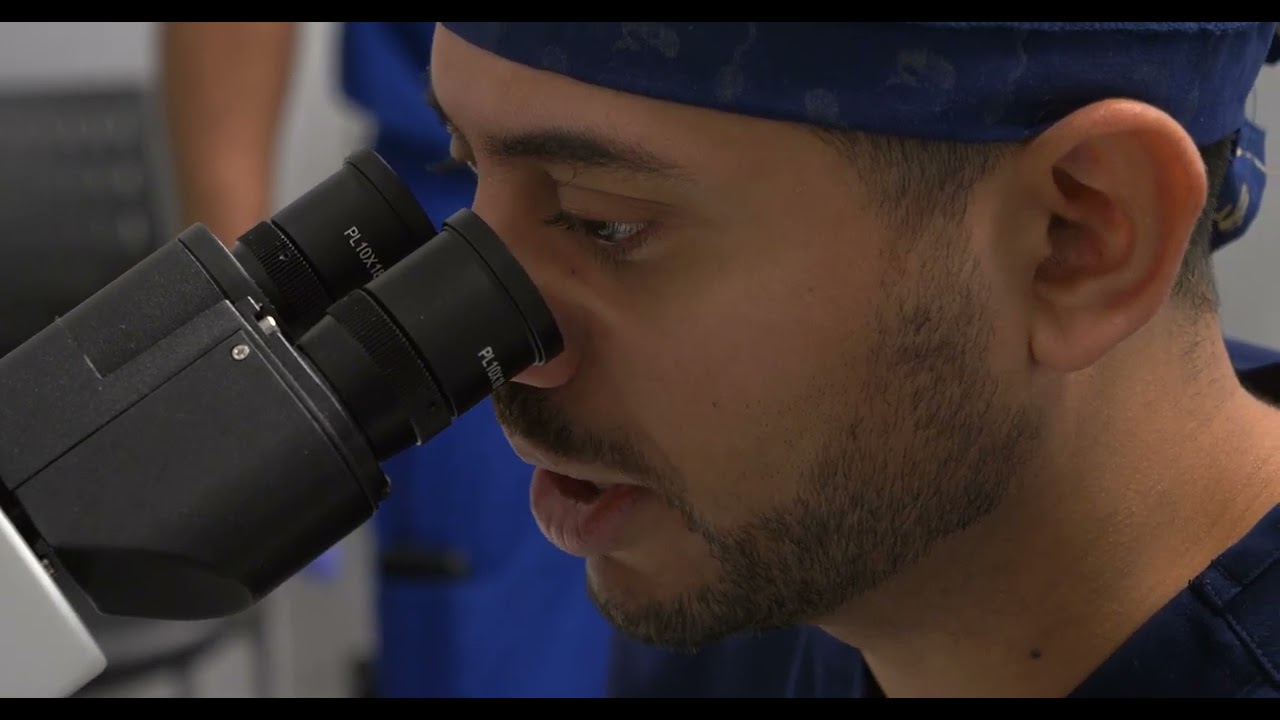
In a more refined approach. Sperm-containing tubules have a different appearance when examined under high magnification; this difference allows for the selective removal of only sperm-containing tubules and avoids unnecessary tissue removal without sperm. Micro-TESE has a significantly higher success rate than traditional TESE.
Micro-TESE is not a testis biopsy. Operative time is at least 1 to 2 hours, as the urologic surgeon must painstakingly examine the testicular content before tubule excision. The inability to retrieve sperm with micro-TESE effectively ends our effort in helping men achieve biological parenthood; as such, no effort is spared to reach a definitive conclusion. Both testes are explored if necessary.
Testicular Mapping (FNA)
Testicular mapping is a minimally invasive diagnostic procedure for men with non-obstructive azoospermia. This procedure involves sampling a dozen regions of the testicle using fine needles to create a “map” of sperm production. This assists the urologic surgeon in identifying specific areas where sperm are present.