Georgia Urology’s HAWK Centers Helps Children Suffering from Incontinence Soar with Success
Jacqueline was at a loss. Her 6-year-old daughter Kathleen’s problem with urinary incontinence had become a daily issue and was getting worse. It was so bad, in fact, Kathleen began lying about wetting herself and hiding the issue from her parents.
“When I went to the pediatrician and the school counselor, I got no real help,” says Jacqueline. “People had lots of theories about what to do, but no real solutions.”
Years earlier, a therapist, who treated Kathleen for severe ADHD and mild dyslexia, said the child would eventually grow out of her incontinence tendencies. When the wetting only worsened, others recommended sticker charts and reward-based training to no avail.
“She was starting to get teased at school, and I knew this was not good,” Jacqueline says. “I didn’t want to set us on a pattern that would have social and emotional ramifications, and affect our relationship with her and her self-esteem.”
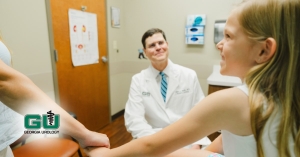
After searching online, Jacqueline found Georgia Urology’s HAWK Center. The HAWK Center stands for Help Awaiting Wet Kids, and is staffed with pediatric professionals specializing in care for children with wetting issues and other forms of abnormal urination.
“I didn’t know if it would help,” Jacqueline says, “but I knew if there was a program like this available, my child is not the only one dealing with this.”
Fortunately, Kathleen was able to start getting the help she needed. Beginning in early 2020, she began an eight- to 12-week program to address her urinary issues. This included a three-fold approach commonly used in children with these issues. First, nutrition was addressed to ensure adequate fiber and proper daily fluid intake. Next, Kathleen began timed voiding using tools such as a potty watch, a wristwatch with an alarm to periodically remind its user to go to the bathroom. Finally, she started doing biometric feedback therapy, a form of physical therapy that teaches children control over the muscles used for voiding.
Things seemed to be going well. However, once COVID-19 occurred and Kathleen was home from school, Jacqueline realized her daughter wasn’t drinking during the day because she was afraid of having an accident.
Jacqueline reached out to the HAWK Center, and her daughter’s nurse practitioner prescribed oxybutynin, a drug used to treat symptoms from overactive bladder. “The potty watch and biometric feedback were both very helpful, and oxybutynin was also very helpful! For us, we’ve seen value in all three.”
According to Jacqueline, steady progress continues, which includes her daughter’s improving demeanor. Reminding Kathleen to go to the bathroom is no longer a regular source of contention, and she’s become more cooperative and less defiant. More positive effects include a boost to Kathleen’s self-confidence.
“We’ve had great success,” explains Jacqueline. “It’s not perfect, but much better. I was getting worried this was going to be a real problem for years. But Georgia Urology laid my fears to rest with an evidence-based scientific approach. They’ve been so helpful. It’s been a huge relief in the household.”
To make an appointment with Georgia Urology’s pediatric team, schedule online or call one of our office locations.