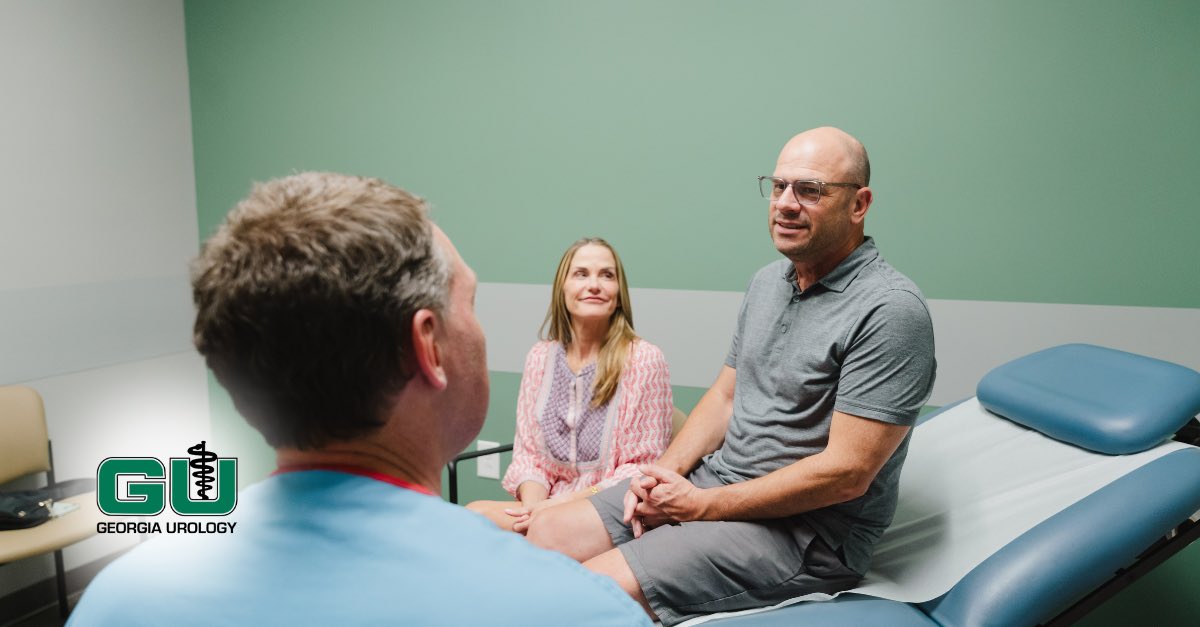
As adults, we expect that having “accidents” is a thing of the past. At Georgia Urology, we understand the self-consciousness and embarrassment people who suffer from incontinence can experience. Luckily, those who suffer from this condition are not alone or without help. Incontinence is a common problem, but many adults find a solution in lifestyle changes or medical treatments, and can get back to living more comfortably sooner.
What Is Incontinence?
This is a condition in which an individual loses some control of the bladder. The severity differs between patients. While some experience small leaks when laughing, coughing, or sneezing, others’ bladders may fail entirely, resulting in being unable to make it to a restroom. No matter the degree, this condition can be disruptive, embarrassing, and uncomfortable.
Stress Incontinence occurs when pressure is placed on the abdomen from exercising, laughing, coughing, or another activity.
Urge Incontinence happens when one experiences a sudden, overwhelming urge to urinate, often resulting in not making it to the bathroom in time.
Overflow Incontinence occurs when one cannot empty their bladder completely, causing multiple small leaks throughout the day.
Functional Incontinence is a result of other impairments that make it difficult to get to the bathroom in time, such as arthritis that makes it difficult to rush to the toilet or unbutton pants.
If you struggle with any form, it’s best to see a doctor as soon as possible to help you manage your symptoms.
How Can I Manage My Incontinence?
Before you can treat your incontinence, you and your doctor should track down the root cause of your condition. If the incontinence is a recent development, it may be caused by a urinary tract infection or constipation. If you’ve been dealing with this condition consistently, it may be due to age, menopausal shifts, problems with the prostate, or even neurological disorders. Pregnancy, too, is a well-known cause of incontinence in women.
After diagnosing your incontinence, you and your doctor will collaborate to come up with the best treatment plan for your lifestyle. Usually, these treatments may include bladder training, double voiding, bathroom schedules, and diet management. In the end, the goal is to train your bladder muscles to hold urine in longer and void more completely during every trip to the bathroom.
If these approaches do not produce results, your doctor may recommend medication or other stimulation treatments. Individuals with Urge or Overflow may experience results after taking muscle relaxers or hormones. Every individual’s treatment plan will be different, depending upon their unique circumstances.
Maintain Your Urinary Health with Georgia Urology!
Your urinary tract is a vital part of your body’s overall functionality. If you’re suffering from embarrassing incontinence, it’s time to take control of your lifestyle and seek treatment today. To schedule your appointment with an expert urologist in Georgia, contact Georgia Urology online.
Most people have never heard or experienced a penile fracture. However, the penis can “fracture”, even if there is no bone in the penis. Georgia Urology expert Dr. Zisholtz explains this urology phenomenon and the experience he’s had correcting these. How Does a Penis Break? During sex, and as the penis becomes erect, the pressure […]
Until we have a vaccine for COVID-19, social distancing will be one of the best ways we have to prevent the spread of this dangerous virus. We urge you to keep practicing it, along with good hygiene and wearing a mask. But don’t put yourself at greater risk for other health problems by medical distancing, […]
Drs. Roosevelt Allen Jr., Carl C. Capelouto, Allen Futral, III, Lawrence M. Goldstone, Mark A. Haber, Andrew J. Kirsch, A. Keith Levinson, Scott D. Miller, Hal C. Scherz, Fred S. Shessel, Barry M. Zisholtz named by Atlanta magazine July 6, 2016 (Atlanta) — Eleven physicians from Georgia Urology — the largest urology practice in the […]