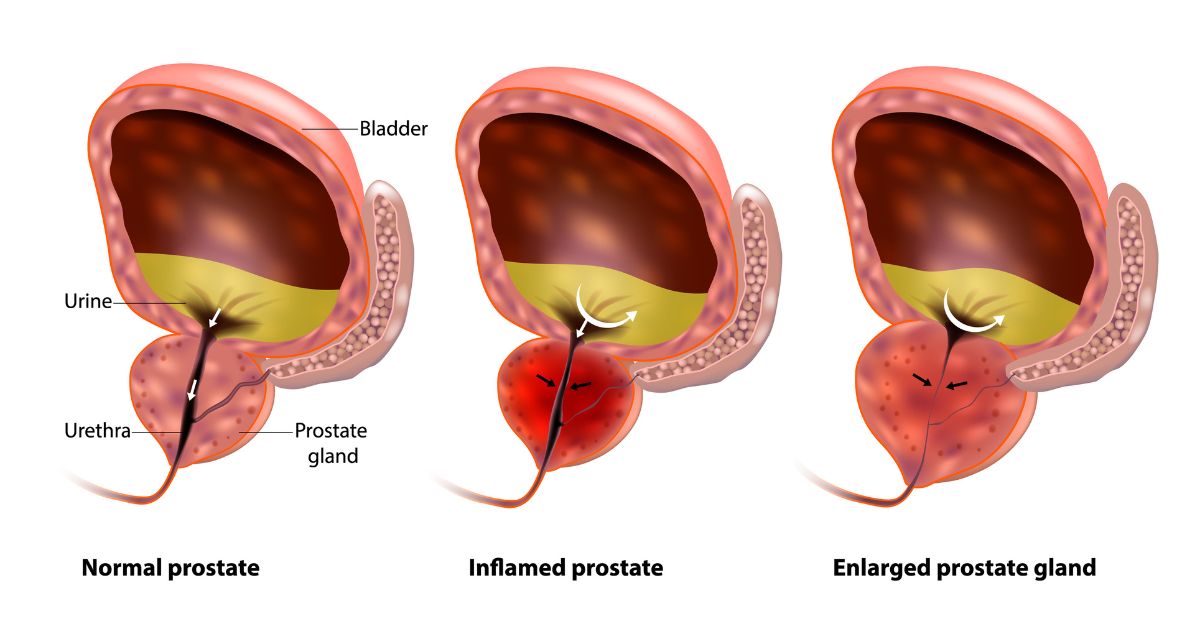
When most men experience Benign Prostatic Hyperplasia or BPH, they are most concerned about the various urinary symptoms that an enlarged prostate can cause. These urinary symptoms can range from mild to severe and often include waking up at night to urinate, a weak stream, a sense that the bladder never fully empties, dribbling and leakage, and much more. Further, many men are apprehensive that the symptoms may be a cause of prostate cancer, but in most cases, it is simply benign enlargement of the prostate; prostate cancer tends only to cause symptoms when in a more advanced stage.
However, there are other considerations that patients must understand regarding prostatic enlargement and associated urinary tract symptoms.
How The Bladder Gets Involved
The bladder is a muscle, and muscles have a specific function. When that function is compromised, there can be serious consequences. Normally, the bladder contracts to force urine through the urethra and out of the body. However, when the prostate constricts the urethra, it creates a partial blockage, causing the bladder to work much harder. Like any other muscle, the bladder’s constant work forces the muscle to overwork and potentially fail.
Even if the bladder doesn’t fail in an absolute sense, chronic blockage can cause temporary or even permanent bladder spasms, which is known as an overactive bladder (OAB). While most people think of OAB as a female concern, a good number of men can experience it as well. Considering the many BPH treatment options and the rapid relief that many provide, why risk damaging the bladder?
A Quick Analogy
While most of us have not spent much time thinking about the effects of BPH on the bladder, we all know about the narrowing of the coronary arteries and how that affects the heart. It’s a very similar concern. Years of plaque buildup in the arteries start narrowing them, making it harder for the heart to pump blood, leading to increased pressure within the arteries (high blood pressure) and irregular (usually fast) heartbeats known as arrhythmias, leading to long-term heart failure. It’s essential to think about the bladder similarly. And while not as life-threatening as a heart condition, the bladder can cause significant problems and impede a patient’s lifestyle.
The Bottom Line
While we all think about BPH as a nuisance, we rarely consider the long-term effects on the bladder that the obstructive nature of an enlarged prostate can cause. As such, we encourage anyone with BPH symptoms to get checked out by a qualified men’s health urologist and learn more about the many treatment options, from lifestyle change to medication to procedures.
Most men do not realize the breadth of treatment options available to them. Some are as simple as a five-minute in-office procedure, but all are minimally invasive, whether in office or surgical.
Intervening early for BPH can make a huge difference in long-term bladder health.
On Sunday, July 23, 2023, Georgia Urology’s Dr. Michael Kemper returned as the featured guest on “The Weekly Check-Up” on News/Talk WSB Radio. Throughout the show, Dr. Kemper and host Dr. Bruce Feinberg focused on men’s health. They discussed enlarged prostate (BPH), lifestyle changes to prevent bladder problems, and the importance of committing to treatment. […]
By Dr. Lewis S. Kriteman Benign Prostatic Hyperplasia (BPH) is the noncancerous growth of the prostate gland, which occurs normally in men as they age. The prostate gland surrounds the urethra at the base of the bladder and compresses the urethra, which reduces the flow of urine emptying from the bladder. This often causes voiding […]
The competition in the market for erectile dysfunction medication is heating up, with more online sellers devising creative ways to try to differentiate themselves from the traditional ED pills offered by urologists. This article will discuss the sublingual dissolvable/soluble tablets that some online providers sell. They claim these tabs facilitate erections faster and at a […]