Top 10 Again: Georgia Urology Pediatrics Honored for Excellence
Children’s Healthcare of Atlanta’s Urology Program climbs to No. 8 in the U.S. News & World Report ranking for 2026-2027 Best Children’s Hospitals. Georgia Urology’s pediatric urologists provide care at CHOA, and we are proud to share in this recognition. The honor reflects our team’s continued effort in research, innovation, and collaborative pediatric care.
What does it take for a pediatric urology program to earn a place among the best in the nation? For Georgia Urology’s pediatric urologists, part of the answer lies in the work happening alongside patient care: conducting research, refining surgical techniques, and developing new approaches to problems that affect children and their families.
Children’s Hospital of Atlanta’s (CHOA) Urology Program ranking No. 8 as the 2026–2027 U.S. News & World Report Best Children’s Hospitals is no small feat. The work of its care team spans some of the most challenging areas of pediatric urology, improving how these conditions are understood and treated.
Most importantly, the work we do here can lead to better outcomes for the children and families we serve.
Moving Pediatric Urology Forward
Research is an ongoing part of what we do, with meaningful implications for children and their families.
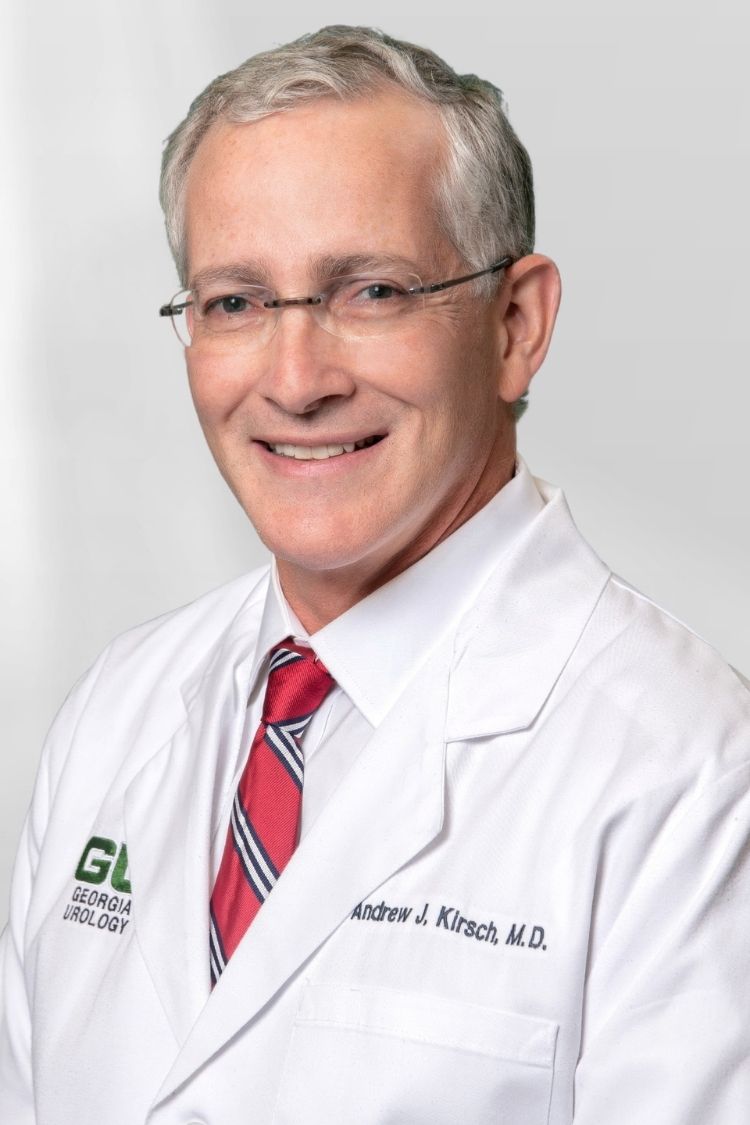
For years, Dr. Andrew Kirsch, chief of pediatric urology at Georgia Urology and Children’s Healthcare of Atlanta, watched families struggle with the same frustration in his clinic: bedwetting treatments that were outdated, poorly tolerated, or simply didn’t work for their child. Years of research into bedwetting have examined parents’ treatment preferences, the psychosocial effects on children and families, and the practical costs of managing the condition at home. That work has produced multiple scientific publications, including The Ultimate Bedwetting Survival Guide, and the development of Soluu™, a next-generation wearable now under FDA review.
The practice has also continued to advance robotic surgery, helping establish CHOA as a leading center for robot-assisted procedures in children. Research that began with early studies of complex ureteral reconstruction has expanded into multi-center outcomes research and comparisons of robotic and open surgical approaches. Georgia Urology is also a major contributor to the Pediatric Urology Robotic Surgery (PURS) Registry, which tracks diagnoses, treatment, management, and outcomes in children.
This ranking reflects the dedication of the broader CHOA Urology Program team, including Georgia Urology physicians, and a shared focus on improving outcomes, expanding access, and advancing care for patients with complex urologic conditions.
Through its collaboration with CHOA, Georgia Urology cares for one of the largest pediatric Prune-Belly Syndrome (PBS) patient populations in the country. Most pediatric urology centers do not encounter this rare anomaly. Our team has extensive experience managing this complex condition. That experience includes abdominal wall reconstruction, which can improve both function and appearance for children with PBS.
Through collaborative research and long-term clinical experience, our pediatric urologists bring what they learn back into patient care.
Innovation at the Forefront
Innovation has long been part of how Georgia Urology’s pediatric urologists approach care. Our physicians are recognized as world leaders in the surgical management of vesicoureteral (urinary) reflux, the care of children with Prune-Belly Syndrome, pediatric robotic surgery, and neuromodulation for bladder dysfunction. For reflux in particular, data from the American College of Surgeons National Surgical Quality Improvement Program (NSQIP) confirm that we are one of the highest-volume centers in the United States, with one of the lowest complication rates.
That leadership includes techniques now used by surgeons around the world, such as the Hydrodistention Implantation Technique (HIT) for minimally invasive endoscopic treatment of reflux, along with ongoing advances in robot-assisted reconstruction and noninvasive nerve stimulation therapies for children with bladder conditions. By teaching at national and international meetings and publishing their results, our pediatric urologists help shape how these conditions are treated well beyond Atlanta.
In addition to surgical innovations, our program is one of the highest volume centers for treating testicular torsion. We have led targeted local efforts to drastically reduce the “door-to-OR” time for this time-sensitive emergency. Furthermore, we are actively engaged in community outreach – partnering with local pediatricians and focusing on areas of lower health literacy to improve education, prompt recognition, and elevate overall patient care.
A Collaborative Effort
Georgia Urology’s pediatric urologists provide care at Children’s Healthcare of Atlanta, creating a close connection between the practice’s physicians and one of the region’s leading pediatric healthcare systems. That connection is part of what makes the No. 8 ranking meaningful.
U.S. News & World Report evaluates pediatric specialty programs based on factors including outcomes, program structure, and national reputation. The ranking reflects the work of the larger care team, including the clinic staff, nurses, researchers, and other specialists involved in caring for children with urologic conditions. At Georgia Urology, that team includes our pediatric nurse practitioners, Kristin Wellman, Katie Hillman Clifton, and Jenessa Martin, who work alongside our physicians to care for children and their families. Families can learn more about the pediatric urology services available through this collaboration on CHOA’s Urology page.
Patient Care is the Real Win
Recognition is meaningful, but its greatest value is in helping children and their families. That means continuing to look for better ways to diagnose and treat urologic conditions while giving families the information and care they need along the way.
When your child needs pediatric urologic care, having an experienced team to turn to can be a relief. The pediatric urologists at Georgia Urology are here to help make the process feel a little easier. Whether you have questions about a new concern or your child needs ongoing care for a known condition, families can schedule an appointment to discuss their next steps with a member of our team.
Our physicians’ leadership extends well beyond the clinic. Dr. Andrew Kirsch serves on the boards of directors of Georgia Urology and the Georgia Chapter of the American Academy of Pediatrics (AAP). Dr. Edwin Smith serves as Surgeon-in-Chief at Children’s Healthcare of Atlanta, where he leads all surgical divisions and operative services. Dr. Wolfgang Cerwinka serves as residency and fellowship program director and leads CHOA’s Comprehensive Stone Program for children with kidney stones, and serves on the board of directors of The Children’s Care Network (TCCN). Dr. Michael Garcia-Roig directs the Hawk Center, co-directs the Differences of Sex Development (DSD) clinic, and serves on the board of directors of the Ambulatory Surgery Center (ASC) at Scottish Rite. Dr. Emily Blum is involved with the American Urological Association’s Innovation Nexus and Secretary for the International Society of Pediatric Innovation. Dr. Shuvro De leads the team’s quality initiatives, serves as the urology liaison to the CHOA Surgical Research Council, and works closely with CHOA to gather the data that informed this year’s U.S. News & World Report submission.