Aquablation TURP: A Revolutionizing Robotic Surgery for BPH
By Dr. Brent A. Sharpe, M.D.
As urologists, it’s not often we get to witness something in our careers that revolutionizes the way we do things. The first time I ever experienced this phenomenon was after performing robotic surgery for prostate cancer. Within 10 years, more 95% of all prostate cancer surgeries in the US were performed using the robotic system.
However, I thought this would be my one and only opportunity to witness this moment of change in our field, but I was wrong. Now, there is a new revolutionizing robotic surgery for men with benign prostate hyperplasia, BPH, which may make other forms of transurethral surgery obsolete.
What is Benign Prostate Hyperplasia?
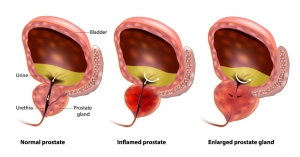
BPH is a very common condition in which the prostate grows and obstructs the flow of urine. Over 70% of men in their 60’s have BPH. It can have many effects on the urinary stream such as a decreased flow, difficulty starting the flow, starting and stopping during urination, frequency, urgency, and commonly getting up at night to use the bathroom.
How Has Benign Prostate Hyperplasia Typically Been Treated?
The mainstays of therapy are daily medications, in office procedures or transurethral surgery called TURP. A TURP removes the obstructive prostate tissue by using a heat-based system, such as laser or cautery, to resect the tissue. Historically, it also has been associated with significant complications and the need for repeat operations. One of the main reasons for this is that the surgery must perform the manually and without any guidance of how much tissue needs to be removed because there is no real time imaging to guide the surgery. Now enter Aquablation TURP!
What is Aquablation TURP?
Aquablation TURP by Procept BioRobotics utilizes the clarity of real-time multidimensional imaging, the accuracy of an autonomous robot, and the power of a heat-free water jet to produce a more reliable and predictable surgery. The use of real-time ultrasound permits for key structures to be identified to allow for normal sexual function and continence, as well as to determine the exact size and shape of the prostate.
The automatic robotic device allows for faster and more predictable removal of tissue. Finally, by not using heat energy during the procedure there is a reduction in the typical complications associated with standard TURP.
Is Aquablation TURP Successful?
In two multicenter, multinational studies, Aquablation has been proven to be safe, effective and consistent. The procedure times are drastically reduced and, in some case, may be reduced by more than 50%. Historically, a large prostate gland could take 2 hours to remove tissue, but in these studies, the Aquablation TURP took only 38 minutes.
Georgia Urology is the first practice in three surrounding states to use this new and exciting surgical robot to perform Aquablation TURP for men with BPH. Currently, Drs. Brent A. Sharpe and Lewis Kriteman have performed nearly 10 procedures with all patients experiencing a significant reduction in their BPH symptoms and are extremely satisfied. For more information, you can contact Drs. Sharpe and Kriteman at 678-205-8387 or click here to schedule an appointment.