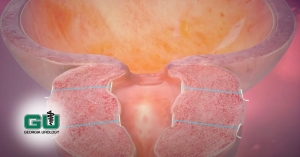
In our consultations with men suffering from symptomatic Benign Prostatic Hyperplasia, also known as BPH, patients often ask us about heavily marketed supplements like Saw Palmetto. If you’ve watched TV over the years, you’ve almost surely seen one (or many) ads for this supplement, a compound derived from a shrub that grows in the southeast United States.
Does Saw Palmetto Work?
The first and biggest concern regarding this and other supplements is that they do not fall under the FDA’s purview for quality control and potency. This means we are primarily at the mercy of individual supplement manufacturers’ internal quality controls, trusting the manufacturer’s often lofty claims. Unfortunately, as we have seen over the years, some supplements have proven ineffective or even dangerous, and we must do our best to vet them the best we can.
Georgia Urology’s Dr. Michael Kemper weighs in on whether patients should consider Saw Palmetto, “NIH-funded trials found little efficacy data to support Saw Palmetto as a treatment for BPH. It shows only minor GI-related side effects even in higher-than-recommended doses. So, if the patient understands that it likely will not work and doesn’t otherwise delay necessary care, there is often no harm in trying it.”
While it can be purchased over the counter, as with any new supplement or medication regimen, we suggest you speak to your primary care physician or a urologist like those at Georgia Urology to understand more about the benefits and risks of saw palmetto.
Pro tip: If you’ve opted to try a supplement of any kind, research the quality and purity of the supplement before buying. Do further research on the company producing your supplements and if they’ve had quality lapses. Some manufacturers employ third-party quality controls to verify purity.
Procedural Options
Beyond saw palmetto, patients need to understand that treatments for BPH have come a long way over the past few decades. While medication or surgery was one of the very few options years ago, now, we have many quick, convenient, and safe therapies for any size prostate and any anatomy. When patients find they are no longer getting adequate results from, for example, medication, they can opt for these procedural options to give them long-lasting results. Some of the most popular, each of which we offer, are:
Ultimately, we know how disruptive BPH can be, especially for men with severe symptoms. The bottom line is that there is no single best treatment for every prostate. We customize our treatment plan depending on the patient and the severity of their symptoms. We do not endorse or suggest supplements for treating BPH. We have medications and procedures to treat the obstruction and consequent symptoms with proven effectiveness. However, we understand that some patients may want to pursue a more “natural” route and are happy to speak to them about the pros and cons.
Speak To Your Doctor
We encourage you to schedule an appointment at one of our Atlanta-area offices to discuss your concerns and available BPH treatment options. We take a stepped approach to treating BPH, ensuring we employ the least invasive, yet most effective, therapy before proceeding to the next. Remember that you, as a patient, have numerous treatment options to manage your lower urinary tract symptoms, and you don’t need to suffer any longer.
Dr. Brent Sharpe administers groundbreaking new treatment for enlarged prostate Georgia Urology and Dr. Brent Sharpe are again leading the greater Atlanta area by being the first to successfully complete the new iTind procedure for men suffering from an enlarged prostate (also known as benign prostatic hyperplasia or BPH). Approximately half of all men ages […]
In the world of men’s urologic health, there are few, if any, conditions more prevalent than BPH or enlarged prostate. It is estimated that about 50% of 50-year-olds and 90% of 80-year-olds experience BPH, and its symptoms include urinary frequency and urgency, waking up at night to urinate, a feeling of incomplete voiding, and dribbling […]
Focal high-intensity focused ultrasound (HIFU) is a less invasive option for qualifying patients who have unilateral intermediate-grade prostate cancer. It is an alternative to radical prostatectomy and radiation. Focal HIFU can target a focused area of the prostate sparing normal tissue. This reduces damage to surrounding structures like blood vessels and nerves which are important […]