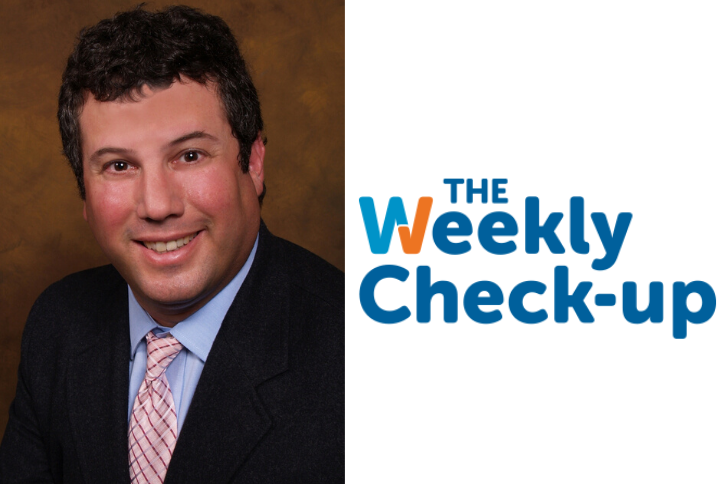
At the beginning of the two-hour segment, Dr. Kriteman discussed his background at Yale University and his experience working as an investment banker on Wall Street before heading to medical school.
However, for the majority of the interview, Dr. Kriteman explained how the common myth of benign prostatic hyperplasia being connected to prostate cancer is not true. He also examined the minimally invasive and surgical options for the treatment of benign prostatic hyperplasia, including transurethral resection of the prostate (TURP), greenlight, aqua ablation, and Urolift procedures.
Dr. Kriteman closed the segment emphasizing how medication doesn’t have to be the first option of patients suffering from BPH. He stated, “Once I have all of the information on my patient’s case, I can better guide the patient on what their options are. Then, it’s a shared decision between the patient and the surgeon to figure out what’s going to be the best way to achieve the restoration of confidence and health.”
Drs. Brent Sharpe and Froylan Gonzalez perform cancer surgeries for first time in area Georgia Urology, the largest urology practice in the Southeast, is known for providing innovative procedures to metro Atlanta. Drs. Brent Sharpe and Froylan Gonzalez recently widened that scope by debuting two new minimally-invasive robotic procedures at Northeast Georgia Medical Center in […]
Atlanta’s largest urology practice recognizes anniversary, honors providers Georgia Urology — the largest urology practice in Atlanta — is now commemorating its 50th anniversary. What began as a small, physician-led group in 1971 has grown to become one of the most trusted practices of its kind in the nation. With a provider roster made up […]
Georgia Urology recently sponsored the Georgia Prostate Cancer Coalition Golf Fundraiser on May 4th at the Country Club of Roswell. Participants in the tournament enjoyed food and drink, as well as the opportunity to take part in the Georgia Prostate Cancer Coalition’s silent auction. Event attendees were also treated to a speech from special guest Leo Mazzone, […]