Georgia Urology & NanoKnife Join Forces with a Game-Changing Case Observation Site
Advances in minimally invasive cancer treatments are reshaping what’s possible for patients with low and intermediate-grade prostate cancer. One of the most promising breakthroughs is the NanoKnife system, which utilizes irreversible electroporation (IRE) — controlled electrical pulses — to destroy cancer cells while preserving blood vessels, nerves, and the continence mechanism or the muscle that maintains continence or dryness.
But adopting a new technology in medicine takes more than equipment. It takes education, experience, and a space where physicians can learn firsthand. That’s where NanoKnife Case Observation Sites come in.
What Is a NanoKnife Case Observation Site?
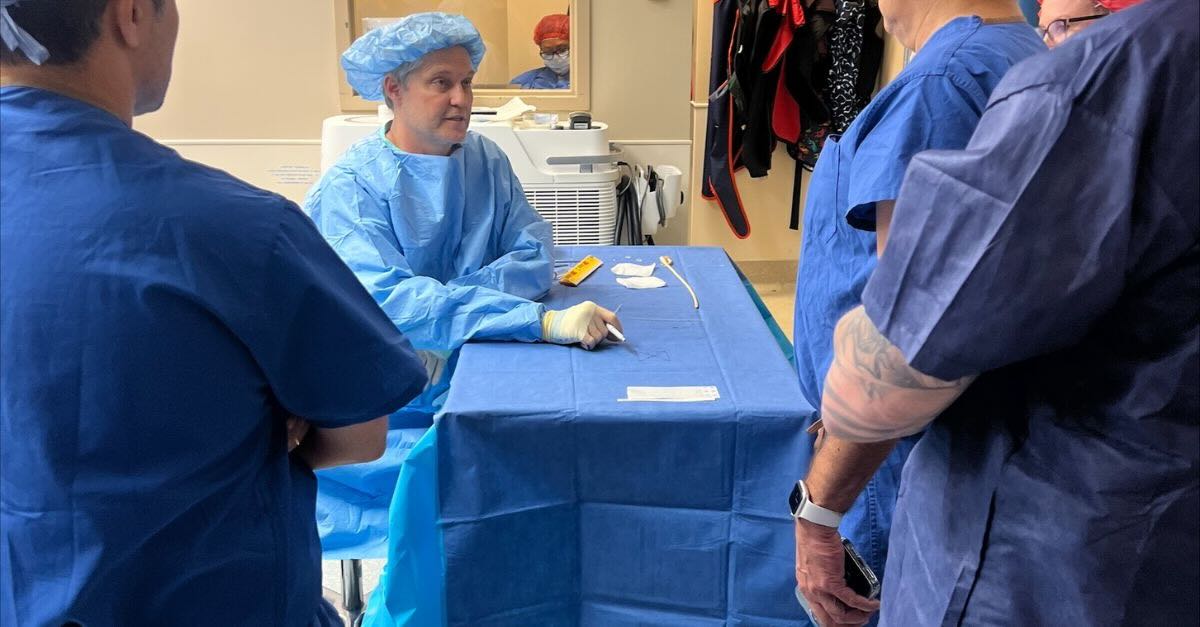
A NanoKnife Case Observation Site is a specialized training and education hub where doctors and surgical teams can observe real-time NanoKnife procedures performed by the most experienced practitioners. These programs offer visiting clinicians the opportunity to learn everything from patient selection and preoperative planning to the subtle details of electrode placement and energy delivery. Instead of just reading about the technique, they see it in action, which dramatically speeds up learning and builds confidence for when they bring the technology back to their own hospitals and practices.
Why These Sites Matter
Observation sites are more than just training grounds. They are critical to:
- Accelerating adoption: Seeing a live case makes it easier for physicians to integrate the NanoKnife system into their practices.
- Improving safety and outcomes: Hands-on exposure helps clinicians master techniques more quickly.
- Fostering collaboration: These sites demonstrate how urologic surgeons and other specialists work together for optimal results.
- Driving research and innovation: Many sites double as incubators for new studies and protocols.
Dr. Brent Sharpe’s Role in Building a World-Class Incubator
 One name synonymous with NanoKnife is that of Georgia Urology’s own Dr. Brent Sharpe, an early adopter of this technology and instrumental in creating a world-class NanoKnife training and observation program that’s helping to spread this technology across the country.
His approach combines live case observation, mentorship, and standardization of best practices to ensure that physicians aren’t just trained—they’re elevated to the highest standard. By linking education and ongoing research, Dr. Sharpe is setting the benchmark for how cutting-edge medical technology can be adopted nationwide.