
Your PSA Level is High… Now What?
Chances are, you’ve heard the acronym “PSA.” It stands for prostate-specific antigen, a protein produced by cells in the prostate, which is a walnut-sized gland below the bladder that’s involved...
Read Article


A common, treatable condition as we age
Throughout a man’s life, his prostate may become larger and start to cause problems as he ages. But what are some of those problems? How do I know if I have Benign Prostatic Hyperplasia (BPH)? When should I see a urologist? What kinds of tests will my urologist perform?
Georgia Urology has access to the most current information and offers the latest diagnostic and treatment modalities for BPH in our office throughout the Atlanta metro area.
The following should help answer these questions as well as others.
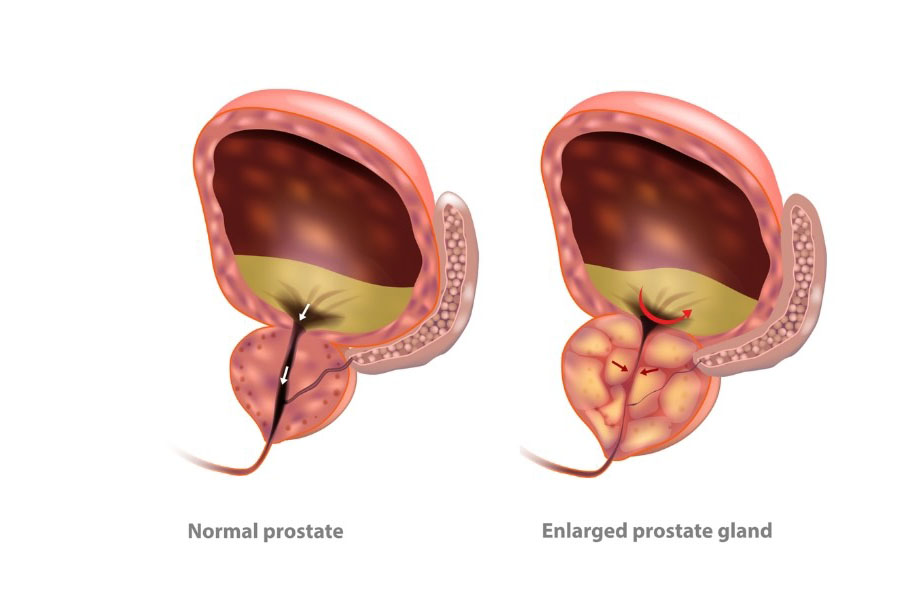
Benign prostatic hyperplasia (BPH) is a common urological condition caused by the non-cancerous enlargement of the prostate gland in aging men. As the prostate enlarges, it can squeeze down on the urethra. This can cause men to have trouble urinating leading to the symptoms of BPH. Risk factors for developing BPH include increasing age and a family history of BPH.
Many men with benign prostate hyperplasia have no symptoms. When symptoms occur, they may range from mild and barely noticeable to serious and disruptive. The amount of prostate enlargement is not always related to the severity of the symptoms. Some men with only slight enlargement have serious symptoms, and some men with a great deal of enlargement have few symptoms. Since the prostate surrounds the urethra just below the bladder, its enlargement can result in symptoms that irritate or obstruct the bladder.
In extreme cases, a man might not be able to urinate at all, which is an emergency that requires prompt attention.
In order to help assess the severity of such symptoms, the American Urological Association (AUA) BPH Symptom Score Index was developed. This diagnostic system includes a series of questions that ask how often the urinary symptoms identified above occur. This helps measure how severe the BPH is, ranging from mild to severe.
The evaluation will typically consist of a thorough medical history, a physical examination (including a digital rectal exam or DRE), and the use of the AUA BPH Symptom Score Index. In addition, the urologist will generally do a urine test called a urinalysis. There are a series of other studies that may or may not be offered to a patient being evaluated for BPH depending on the clinical situation. These include:
You should see your urologist if you have any of the symptoms mentioned previously that are bothersome. In addition, you should see your urologist immediately if you have blood in the urine, pain with urination, burning with urination, or are unable to urinate.
BPH treatment decisions are based on individual conditions. Your urologist will discuss the pros and cons of each option during your BPH treatment planning. Treatment options for enlarged prostate, or benign prostatic hyperplasia (BPH), may include the following:

No, it is very common. It will affect approximately 50 percent of men between the ages of 51 and 60 and up to 90 percent of men over 80.
No, BPH is not cancer and cannot lead to cancer, although both conditions can exist together. There are usually no symptoms during the early stages of prostate cancer, so yearly physical examinations and PSA tests are highly recommended to eliminate cancer diagnosis.
In the majority of men, BPH is a progressive disease. It can lead to bladder damage, infection, blood in the urine, and even kidney damage. It is therefore important for men with this condition to continue to be followed.
To date, there is not enough research data to predict who will respond to medical therapy or which drug will be better for an individual patient. There is a variety of drugs available and, in some men, a combination of drugs may work best.
If you are diagnosed with BPH, you should discuss all treatment options with your urologist. Together, you and your doctor can decide whether medication, minimally invasive therapy, or surgical treatment is best for you.
Call Georgia Urology today to schedule an appointment with our experienced urologists.
Chances are, you’ve heard the acronym “PSA.” It stands for prostate-specific antigen, a protein produced by cells in the prostate, which is a walnut-sized gland below the bladder that’s involved...
Read Article
What we eat impacts every physiological process and anatomical structure, and the prostate is no exception. The foods we consume directly affect how the prostate functions. Lycopene has been on...
Read ArticleTreating Benign Prostatic Hyperplasia (BPH) for Bladder Health
When most men experience Benign Prostatic Hyperplasia or BPH, they are most concerned about the various urinary symptoms that an...Read
Urolift Changes Robert’s Lifestyle So He Can Enjoy Life to Its Fullest
In the world of men’s urologic health, there are few, if any, conditions more prevalent than BPH or enlarged prostate....Read